
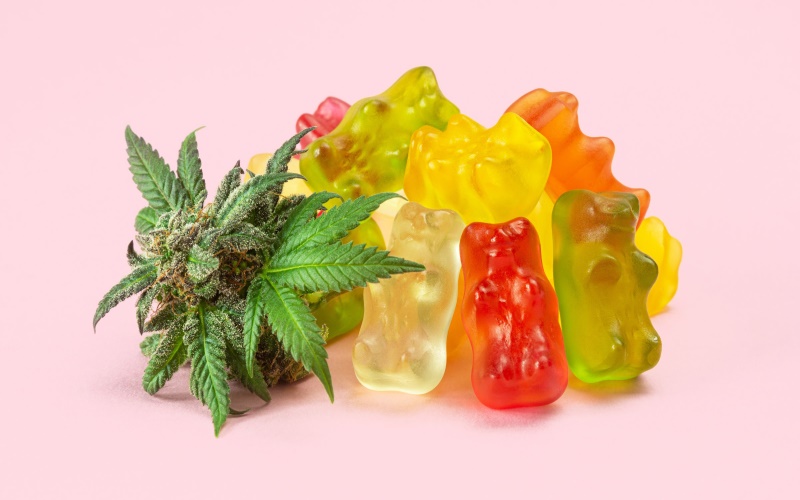
Delta-8 THC gummies, often referred to as D8 edibles, have surged in popularity across the United States due to their milder psychoactive effects compared to Delta-9 THC. However, their legal status remains complex and varies significantly from state to state.
What Are Delta-8 Gummies?
Delta-8 THC is a cannabinoid found in cannabis plants, chemically similar to Delta-9 THC—the primary psychoactive compound in marijuana. While Delta-9 THC is typically extracted from marijuana plants, Delta-8 is often synthesized from hemp-derived CBD, which became federally legal under the 2018 Farm Bill, provided the product contains less than 0.3% Delta-9 THC by dry weight. This legal framework inadvertently paved the way for the proliferation of Delta-8 products, including gummies, tinctures, and vapes.
Federal Perspective
Under the 2018 Farm Bill, hemp-derived cannabinoids containing less than 0.3% Delta-9 THC are legal at the federal level. Consequently, Delta-8 THC products, such as gummies, are federally legal if they meet this criterion. However, the Drug Enforcement Administration (DEA) has expressed concerns about synthetic cannabinoids, suggesting that Delta-8 THC may fall under the Controlled Substances Act if it is synthetically produced, regardless of its hemp origin. This ambiguity has led to legal challenges and varying interpretations across different jurisdictions.
State-by-State Variations
The legality of Delta-8 gummies is not uniform across the United States. Some states have explicitly legalized them, while others have imposed restrictions or outright bans.
States Where Delta-8 Gummies Are Legal
In states like Florida, Texas, Illinois, and Pennsylvania, Delta-8 THC products are legal and widely available. These states have not enacted specific legislation to ban or regulate Delta-8 THC, allowing consumers to purchase d8 edibles without significant legal concerns.
States with Restrictions
California and Louisiana have legalized Delta-8 THC but have implemented stringent regulations. These include licensing requirements for manufacturers and sellers, product testing mandates, and limitations on THC content per serving. Such regulations aim to ensure consumer safety and product consistency.
States Where Delta-8 Gummies Are Banned
Conversely, states like Arkansas, Colorado, and New York have banned Delta-8 THC products. In Arkansas, a court ruling upheld the state’s ban on hemp-derived THC products, including Delta-8, classifying them as Schedule VI controlled substances. Wikipedia Similarly, Colorado prohibits synthetic intoxicating hemp products, including Delta-8 THC.
States with Unclear or Evolving Status
Wisconsin presents a unique case where the legal status of Delta-8 THC is in a gray area. While state law deems products containing over 0.3% Delta-9 THC illegal, the enforcement is inconsistent due to local decriminalization efforts and the “hemp-derived THC loophole,” allowing products like Delta-8 gummies to be sold legally despite the ambiguity.
Safety and Consumer Considerations
Despite their legal status, consumers should exercise caution when purchasing Delta-8 gummies. The lack of standardized regulations means product quality can vary significantly. It’s crucial to choose products that provide third-party lab testing results to ensure safety and potency. Additionally, starting with a low dose is advisable, as individual reactions to Delta-8 THC can differ.
The Future of Delta-8 Gummies
The future of Delta-8 gummies hinges on forthcoming federal legislation. Proposals to revise the definition of legal hemp in the 2025 Farm Bill could potentially eliminate the loophole that currently allows Delta-8 THC products to be sold legally. Such changes would likely lead to stricter regulations or outright bans on Delta-8 THC products nationwide.
Conclusion
The legal landscape for Delta-8 gummies is complex and rapidly evolving. While federally legal under certain conditions, state laws vary widely, with some states embracing Delta-8 THC products, others imposing strict regulations, and some banning them outright. Consumers interested in D8 edibles should stay informed about their state’s specific laws and exercise caution when purchasing these products to ensure safety and compliance.